
Isolation and identification of bioactive compounds from Antrodia camphorata against ESKAPE pathogens
Figures
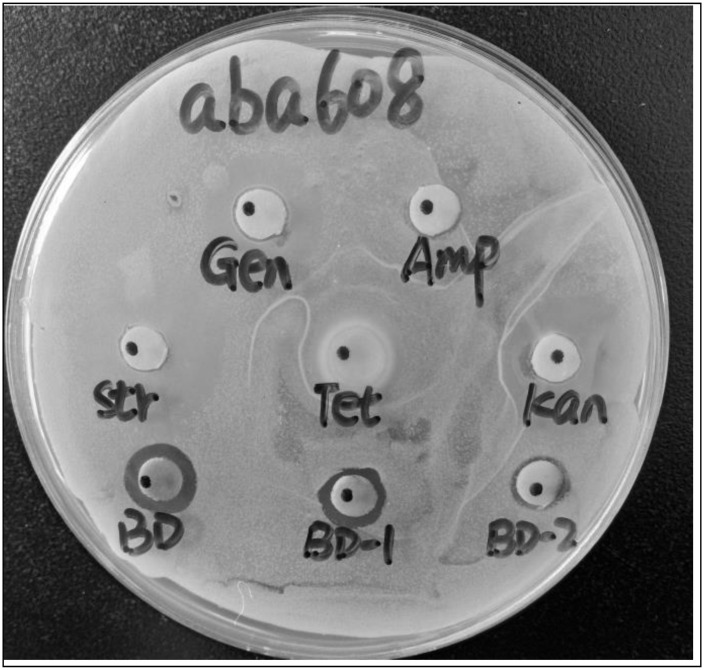
Fig 1. Antibacterial activity of A .…
Fig 1. Antibacterial activity of A . camphorata extracts compared with 5 antibiotics.
Gen. represents Gentamicin,…
Fig 1. Antibacterial activity of A. camphorata extracts compared with 5 antibiotics. Gen. represents Gentamicin, Amp. represents Ampicillin, Str. represents Streptomycin, Tet. represents Tetracycline, Kan. represents Kanamycin, BD represents A. camphorata extracts (50.00 mg/mL), BD-1 represents A. camphorata extracts (25.00 mg/mL), BD-2 represents A. camphorata extracts (12.50 mg/mL).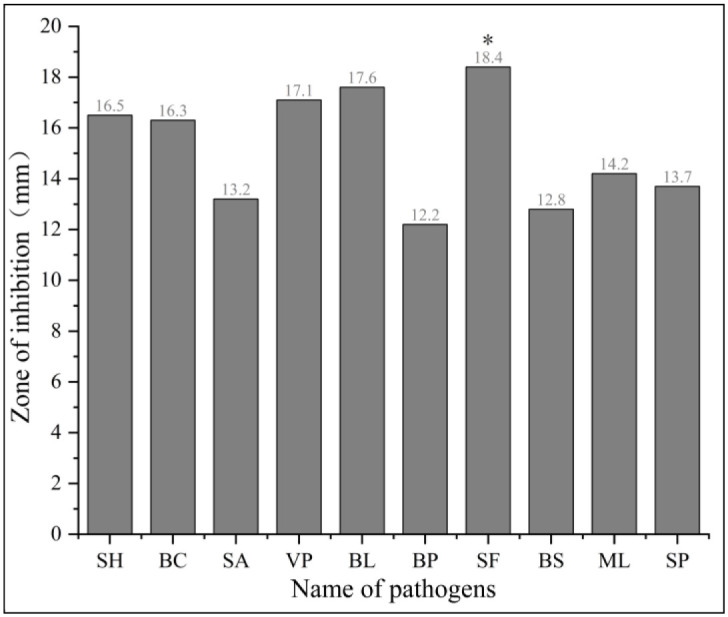
Fig 2. Antibacterial activity of A .…
Fig 2. Antibacterial activity of A . camphorata extracts against foodborne pathogens.
Fig 2. Antibacterial activity of A. camphorata extracts against foodborne pathogens.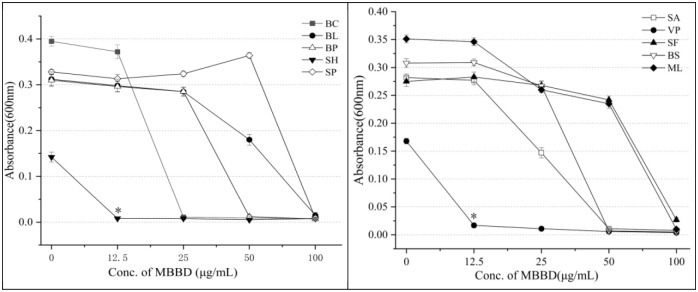
Fig 3. MIC of compound MBBD against…
Fig 3. MIC of compound MBBD against foodborne pathogens.
Values are the mean of n…
Fig 3. MIC of compound MBBD against foodborne pathogens. Values are the mean of n = 3 experiments.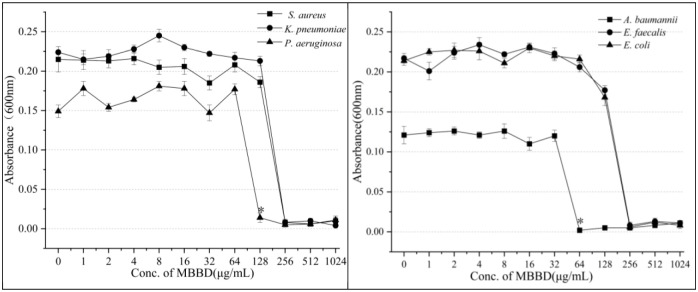
Fig 4. MIC of compound MBBD against…
Fig 4. MIC of compound MBBD against resistant pathogenic bacteria.
Data are reported as means…
Fig 4. MIC of compound MBBD against resistant pathogenic bacteria. Data are reported as means ± SD of triplicate wells. Values are the mean of n = 3 experiments.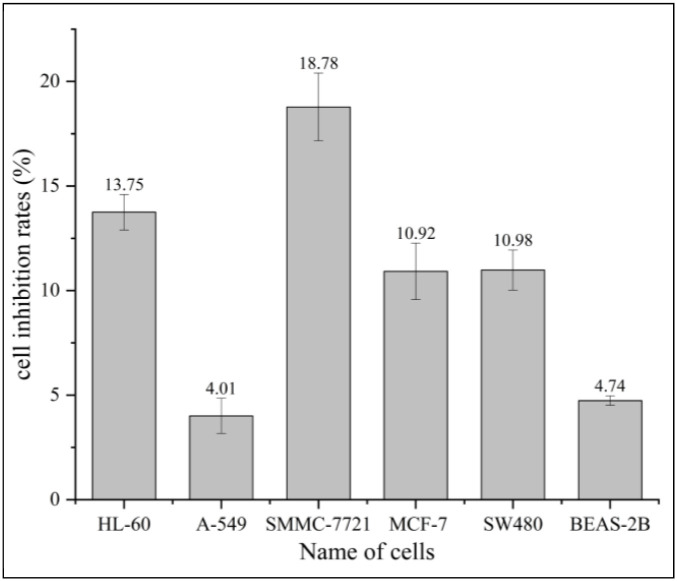
Fig 5. Cell inhibition rate of compound…
Fig 5. Cell inhibition rate of compound MBBD (40μM).
Fig 5. Cell inhibition rate of compound MBBD (40μM).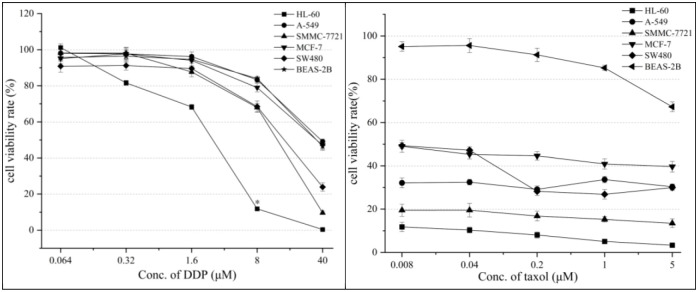
Fig 6. Cell inhibition rate of positive…
Fig 6. Cell inhibition rate of positive control group DDP and taxol.
Fig 6. Cell inhibition rate of positive control group DDP and taxol.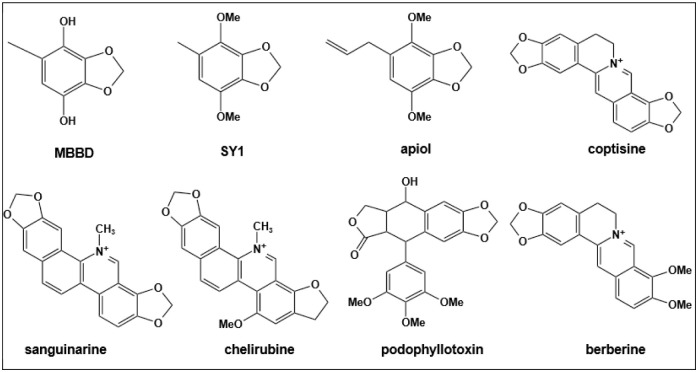
Fig 7. Chemical structure of MBBD and…
Fig 7. Chemical structure of MBBD and its analogs.
Fig 7. Chemical structure of MBBD and its analogs. All figures (7)