
Extracted Triterpenes from Antrodia cinnamomea Reduce the Inflammation to Promote the Wound Healing via the STZ Inducing Hyperglycemia-Diabetes Mice Model
Abstract
This research evaluated the effects of triterpenes on the regulation of STZ-induced hyperglycaemic diabetes through an anti-inflammatory response. Diabetic mice were orally administered various concentrations of triterpenes on a daily basis. Weight gain, volume of drinking water, and liver and spleen weight were recorded and evaluated. These evaluations presented a positive regulation to the abnormal metabolism appearance compared to the diabetic mice. In the diabetic mice, the detection of adiponectin production or elevated levels of inflammatory factors such as CCL1 and TPO expression were found to reduce hyperglycaemia and thereby induce an inflammatory response. Moreover, to the best of our knowledge, hyperglycaemia impairs the tissue healing associated with an increased and prolonged inflammatory response. An investigation of the anti-inflammatory response in wound healing as affected by the triterpenes verified the promotion of wound recovery.
Figures 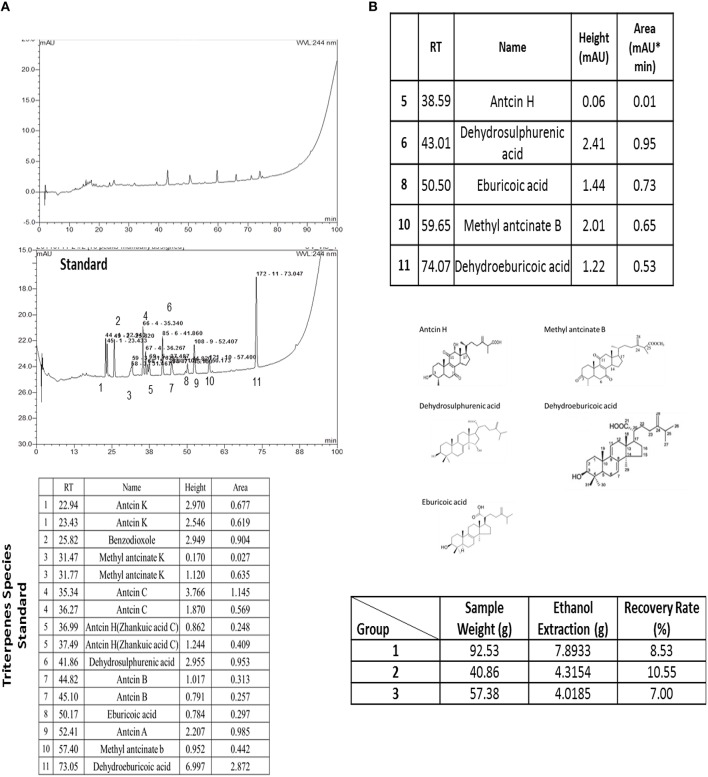
Figure 1
The extracted triterpenes was analyzed…Figure 1
The extracted triterpenes was analyzed to identify the species of triterpenes by using… Figure 1 The extracted triterpenes was analyzed to identify the species of triterpenes by using of the HPLC (A). The extracted triterpenes was major included of Antcin H, Dehydrosulphurenic acid, Eburicoic acid, Methyl antcinate B and Dehydroeburicoic acid (B). Recovery rate of the extracted triterpenes was recorded with three repeats.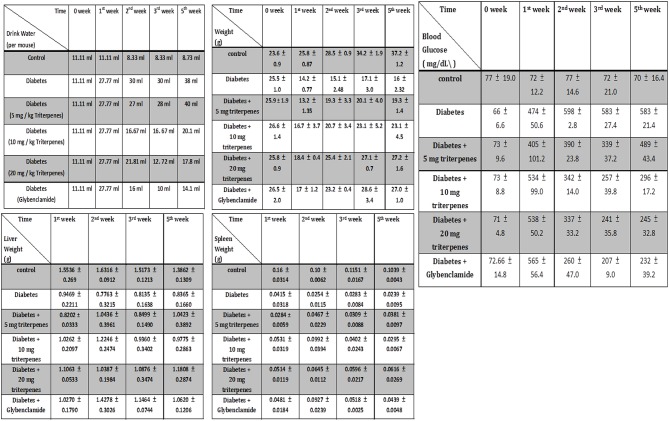
Figure 2
The appearance of drinking water…Figure 2
The appearance of drinking water volume, weight, liver weight, spleen weight and the… Figure 2 The appearance of drinking water volume, weight, liver weight, spleen weight and the blood glucose was weekly measured and recorded. (n = 5, Results were presented as means ± SEM).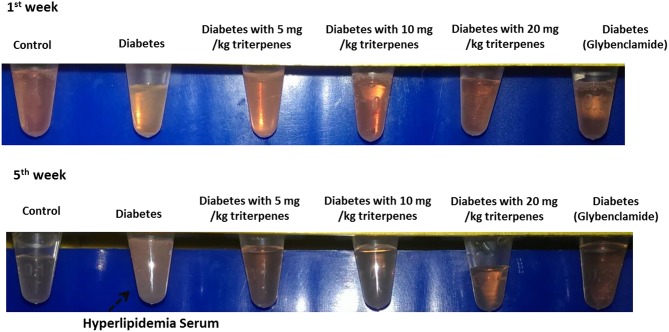
Figure 3
The observation of serum and…Figure 3
The observation of serum and it was presented as the hyperlipidemia seurm in… Figure 3 The observation of serum and it was presented as the hyperlipidemia seurm in the 5th week.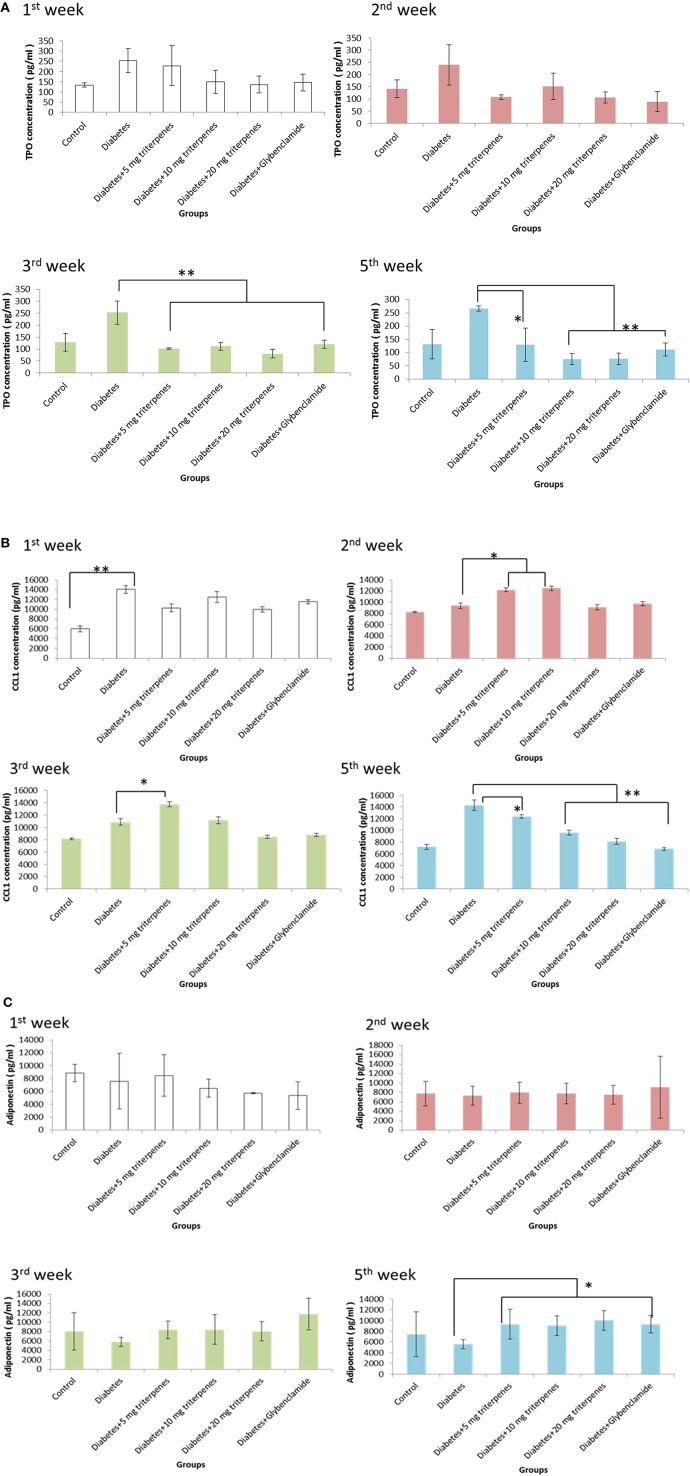
Figure 4
The TPO concentration was measured…Figure 4
The TPO concentration was measured in the 1st, 2nd, 3rd, and 5th week… Figure 4 The TPO concentration was measured in the 1st, 2nd, 3rd, and 5th week as presented in (A). The alteration of CCL1 was recorded in the 1st, 2nd, 3rd, and 5th week as presented in (B). The adiponectin was measured 1st, 2nd, 3rd, and 5th week as presented in (C). (n = 5, p-value less than 0.05 as marked as * and less than 0.01 as marked as ** was considered to be statistically significant. Results were presented as means ± SEM).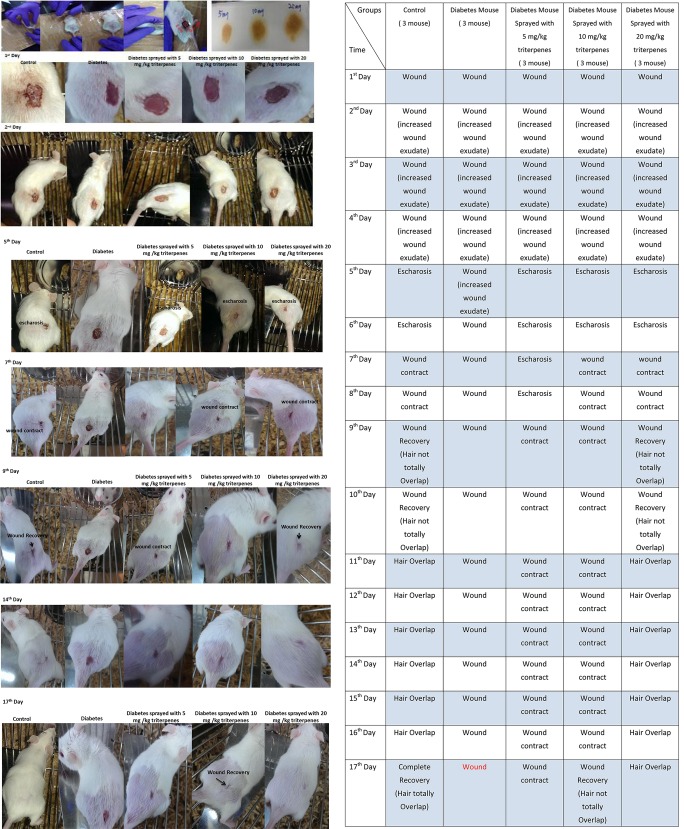
Figure 5
The wound healing investigation of…Figure 5
The wound healing investigation of diabetes mice, the presented observation was indicated to… Figure 5 The wound healing investigation of diabetes mice, the presented observation was indicated to spray with the 20 mg/kg triterpenes with 3M CavilonTMNo Sting Barrier Film was exactly able to induce the diabetes mice into wound healing (n = 3).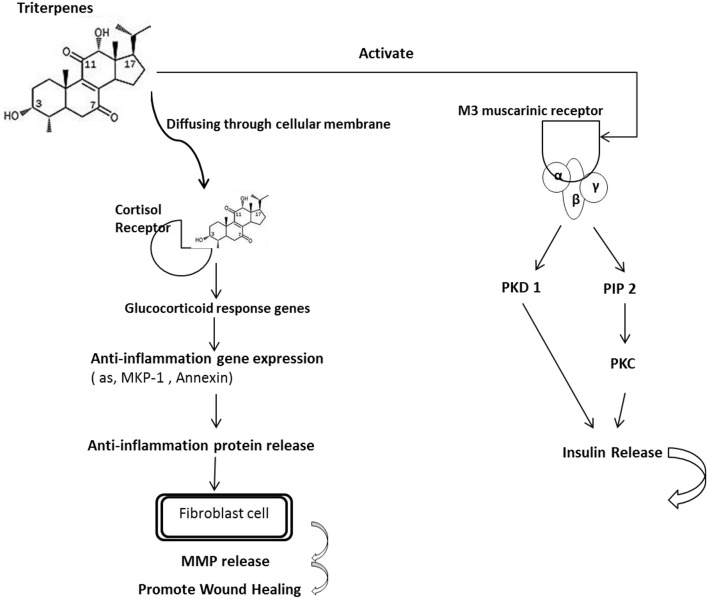
Figure 6
The proposed mechanism of triterpenes…Figure 6
The proposed mechanism of triterpenes is involved in the diabetes mice with anti-inflammation… Figure 6 The proposed mechanism of triterpenes is involved in the diabetes mice with anti-inflammation. The mechanism of triterpenes was speculated as binding to the glucocorticoid responsive elements (GREs) of target genes to regulate gene expression such as by suppressing the expression of proinflammatory proteins and enhancing the expression of anti-inflammatory proteins. Furthermore, oleanolic acid is a triterpene that can increase insulin secretion by activating muscarinic M3 receptors in pancreatic β-cells through the ACh released from cholinergic nerve terminals. According to these findings, we suggest that the extracted triterpenes could directly permeate the cell to bind with the GRE or indirectly combine with the M3 receptor, resulting in an anti-inflammatory effect and thereby inducing wound healing in the diabetic mice.