
Comparative Transcriptomic Analyses Reveal the Regulatory Mechanism of Nutrient Limitation-Induced Sporulation of Antrodia cinnamomea in Submerged Fermentation
Abstract
Antrodia cinnamomea is a precious edible and medicinal mushroom with various biological activities, such as hepatoprotection, antitumor, antivirus, immunoregulation, and intestinal flora regulation. However, the wild fruiting bodies of A. cinnamomea are scarce and expensive. Submerged fermentation based on spore inoculation has become the most efficient and popular artificial culture method for A. cinnamomea. In order to complement the mechanism of asexual sporulation of A. cinnamomea in submerged fermentation, and provide a theoretical basis to further improve the sporulation, comparative transcriptomics analysis using RNA-seq and RT-qPCR were conducted on A. cinnamomea mycelia cultured under different nutritional conditions to reveal the regulatory mechanism underlying the asexual sporulation induced by nutrient limitation. The obtained mechanism is as follows: under nitrogen starvation, the corresponding sensors transmit signals to genes, such as areA and tmpA, and promote their expression. Among these genes, AreA has a direct or indirect effect on flbD and promotes its expression, further enhancing the expression of brlA. Meanwhile, TmpA has a direct or indirect effect on brlA and promotes its expression; under carbon starvation, transport protein Rco-3, as a glucose sensor, directly or indirectly transmits signals to brlA and promotes its expression. BrlA promotes the expression of abaA gene, which further enhances the expression of wetA gene, and wetA then directly leads to asexual sporulation and promotes spore maturation; meanwhile, gulC can also promote cell autolysis, which provides energy and raw materials for sporulation.
Figures 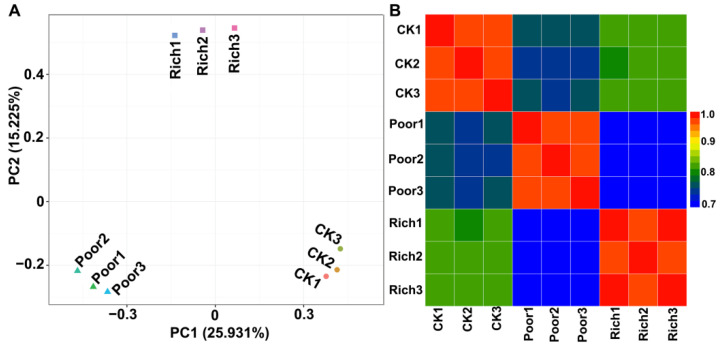
Figure 1
Statistical analysis of sample repeatability…
Figure 1
Statistical analysis of sample repeatability and differentially expressed genes. ( A ): PCA…
Figure 1 Statistical analysis of sample repeatability and differentially expressed genes. (A): PCA analysis; (B): correlation analysis.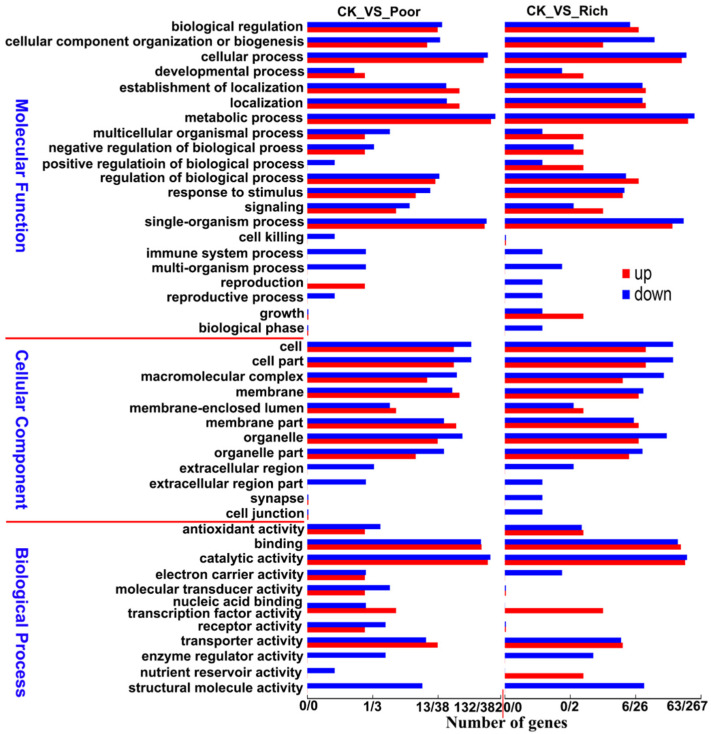
Figure 2
GO classification enrichment analysis of…
Figure 2
GO classification enrichment analysis of the differentially expressed genes.
Figure 2 GO classification enrichment analysis of the differentially expressed genes.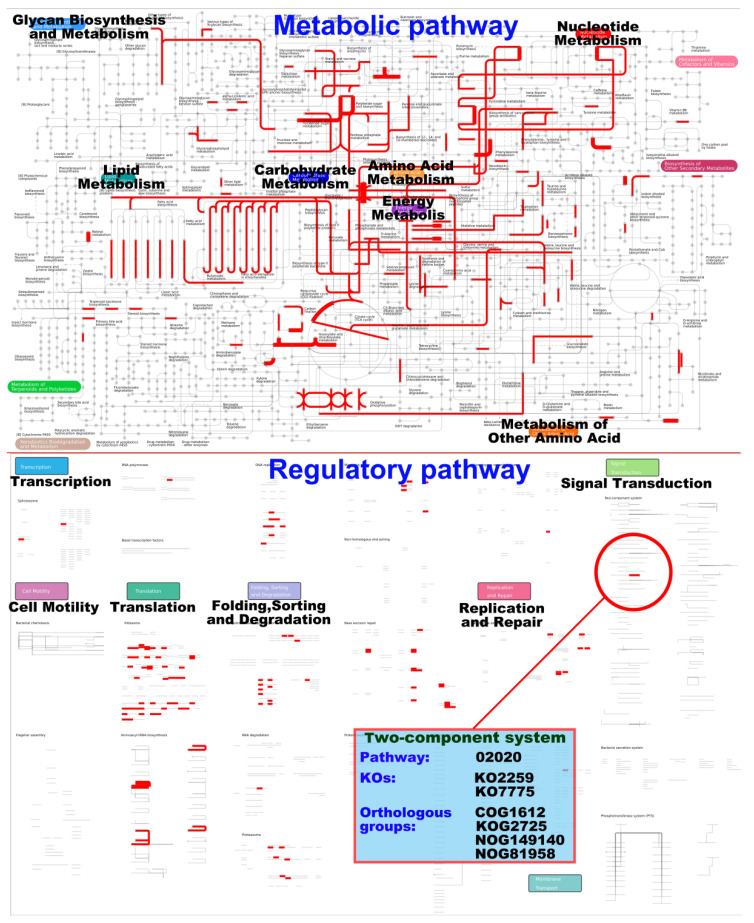
Figure 3
iPath analysis of the differentially…
Figure 3
iPath analysis of the differentially expressed genes.
Figure 3 iPath analysis of the differentially expressed genes.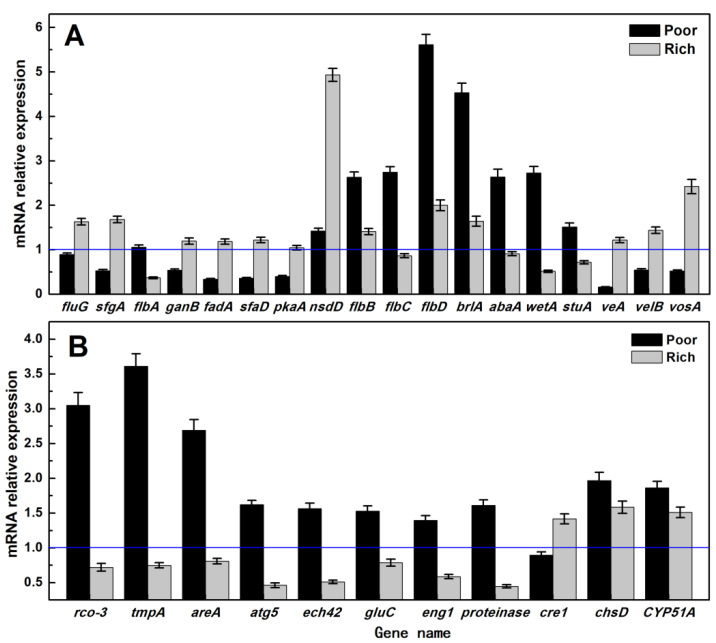
Figure 4
Different nutritional conditions effect on…
Figure 4
Different nutritional conditions effect on the genes involving in condition of A .…
Figure 4 Different nutritional conditions effect on the genes involving in condition of A. cinnamomea. (A): changes in the expression of genes related to asexual sporulation signal pathway mediated by A. cinnamomea FluG; (B): changes in the expression of other genes related to asexual sporulation of A. cinnamomea matched with the local protein database; A. cinnamomea 18S rRNA gene was taken as the internal reference, and mycelium of control group was taken as CK.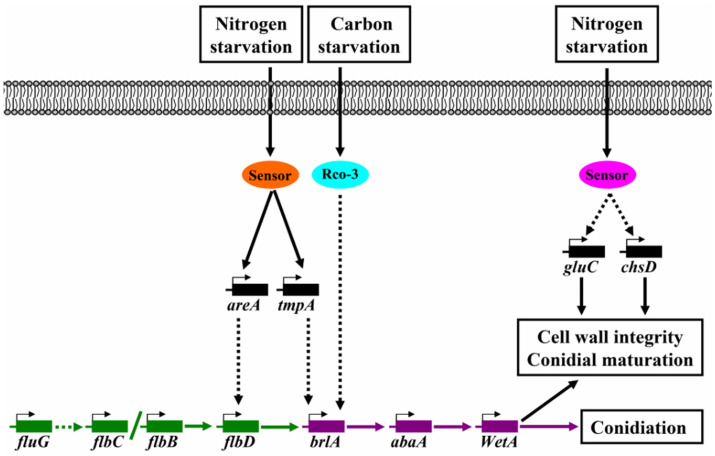
Figure 5
Proposed nutrient limitation induced signaling…
Figure 5
Proposed nutrient limitation induced signaling pathway of conidiation for A . cinnamomea .
Figure 5 Proposed nutrient limitation induced signaling pathway of conidiation for A. cinnamomea.