
A review on the cultivation, bioactive compounds, health-promoting factors and clinical trials of medicinal mushrooms Taiwanofungus camphoratus, Inonotus obliquus and Tropicoporus linteus
Abstract
Medicinal mushrooms, such as Taiwanofungus camphoratus, Inonotus obliquus, and Tropicoporus linteus, have been used in traditional medicine for therapeutic purposes and promotion of overall health in China and many East Asian countries for centuries. Modern pharmacological studies have demonstrated the large amounts of bioactive constituents (such as polysaccharides, triterpenoids, and phenolic compounds) available in these medicinal mushrooms and their potential therapeutic properties. Due to the rising demand for the health-promoting medicinal mushrooms, various cultivation methods have been explored to combat over-harvesting of the fungi. Evidence of the robust pharmacological properties, including their anticancer, hypoglycemic, hypolipidemic, antioxidant, and antiviral activities, have been provided in various studies, where the health-benefiting properties of the medicinal fungi have been further proven through numerous clinical trials. In this review, the cultivation methods, available bioactive constituents, therapeutic properties, and potential uses of T. camphoratus, I. obliquus and T. linteus are explored.
Figures 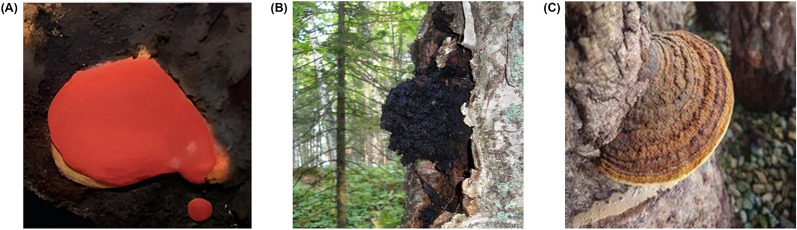
Fig. 1
Fruiting bodies of ( A…
Fig. 1
Fruiting bodies of ( A ) Taiwanofungus camphoratus , ( B ) Inonotus…
Fig. 1 Fruiting bodies of (A) Taiwanofungus camphoratus, (B) Inonotus obliquus, and (C) Tropicoporus linteus on their host trees [25, 26] (Min and Kang 2021)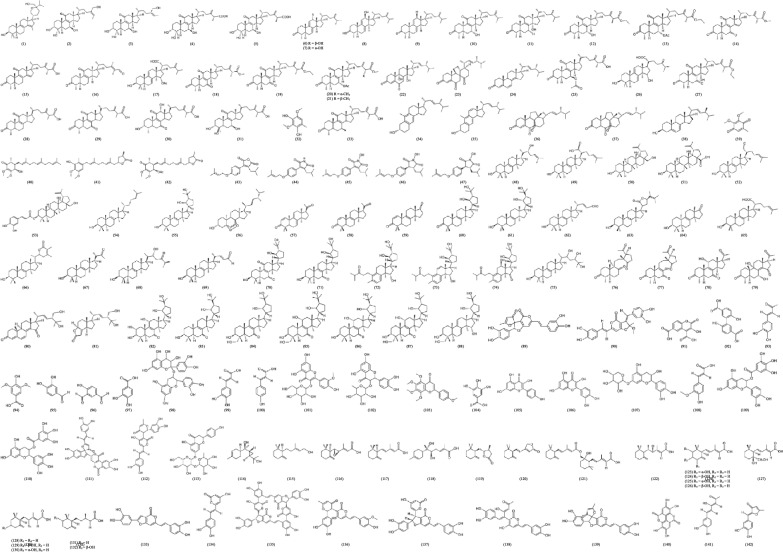
Fig. 2
Chemical structures of bioactive compounds…
Fig. 2
Chemical structures of bioactive compounds isolated from Taiwanofungus camphoratus (1–38 terpenes and terpenoids;…
Fig. 2 Chemical structures of bioactive compounds isolated from Taiwanofungus camphoratus (1–38 terpenes and terpenoids; 39–42 quinone derivatives; 43–47 maleic and succinic acid derivatives), Inonotus obliquus (38, 48–88 terpenes and terpenoids; 89–113 phenolic compounds), and Tropicoporus linteus (114–132 terpenes and terpenoids; 93, 95, 97, 99, 111, 112, 133–142 phenolic compounds)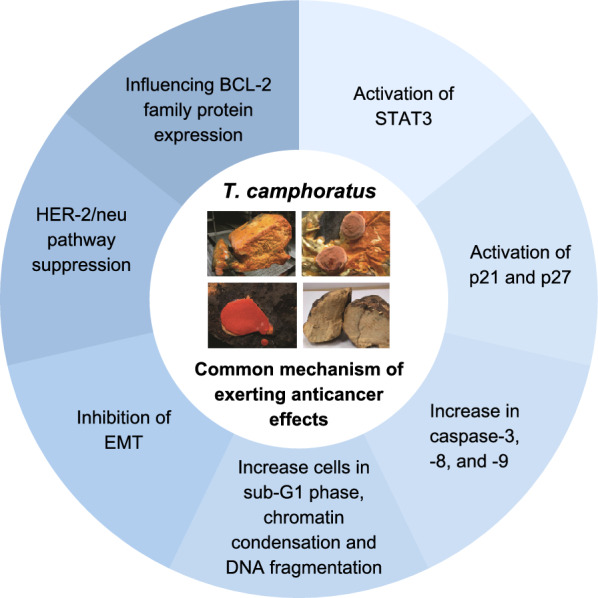
Fig. 3
Mechanisms found to be employed…
Fig. 3
Mechanisms found to be employed by Taiwanofungus camphoratus to exert anticancer effects
Fig. 3 Mechanisms found to be employed by Taiwanofungus camphoratus to exert anticancer effects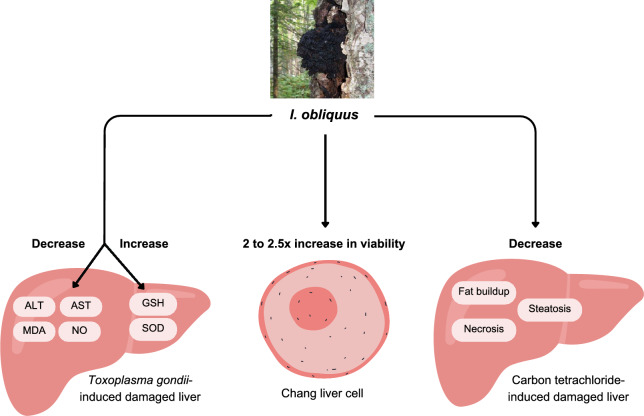
Fig. 4
Hepatoprotective properties possessed by Inonotus…
Fig. 4
Hepatoprotective properties possessed by Inonotus obliquus
Fig. 4 Hepatoprotective properties possessed by Inonotus obliquus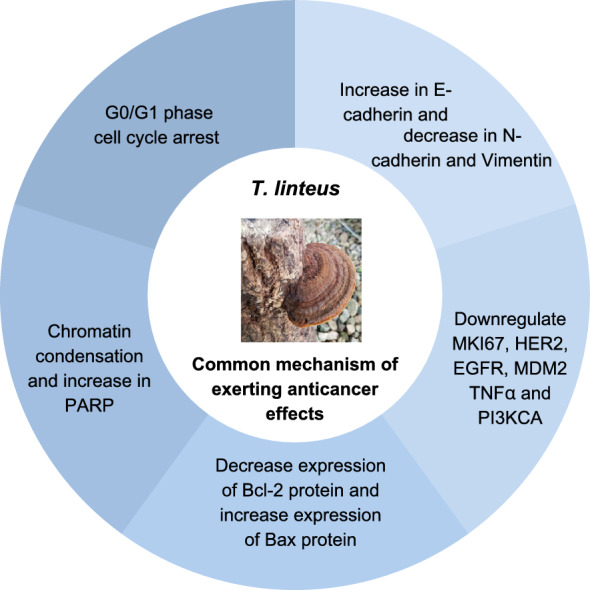
Fig. 5
Reported mechanisms through which Tropicoporus…
Fig. 5
Reported mechanisms through which Tropicoporus linteus exert anticancer properties
Fig. 5 Reported mechanisms through which Tropicoporus linteus exert anticancer properties